
In this New World Order Daily Briefing, Vee (@veemeta), Chief Roar Officer at Doginal Dogs and CSN host, reports on major hemispheric security announcements, international energy debt restructuring in Venezuela, and diplomatic clarifications between Beijing, Ottawa, and Washington. Key developments include an upcoming summit of Western Hemisphere defense chiefs led by U.S. General Dan Caine, U.S. operational control over Venezuelan crude oil exports impacting Chinese loan servicing, and official statements from Chinese and Canadian diplomats regarding bilateral trade agreements.
The Pentagon announced that U.S. General Dan Caine will convene a defense summit on February 11, bringing together military leaders from 34 Western Hemisphere nations. The Department of Defense stated the summit marks the first combined gathering of regional military chiefs focused on strengthening joint counter-narcotics operations, interdicting transnational criminal organizations, and building shared regional security priorities across North, Central, and South America.
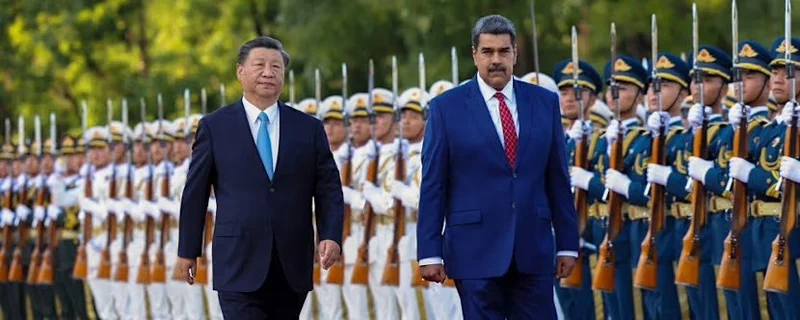
In energy and sovereign debt governance, Beijing's long-standing energy investments in Venezuela face ongoing adjustments following U.S. administrative control over Venezuelan oil exports. AidData metrics show Chinese financial institutions extended $106 billion in loans to Venezuela between 2001 and 2018, with outstanding debt estimated between $10 billion and $15 billion. U.S. control over crude barrels (including the 642,000 barrels per day previously exported to China) has disrupted debt-servicing mechanisms, prompting market analysts to evaluate potential Chinese energy supply pivots toward Russia or Iran.
Diplomatic statements addressed trade dynamics between China, Canada, and the United States. Chinese Foreign Ministry spokesman Guo Jiakun clarified that recent sector-specific arrangements with Ottawa do not target Washington. Canadian Prime Minister Mark Carney confirmed that Canada is not seeking a comprehensive free trade agreement with China, focusing instead on tariff-affected sectors. Foreign Affairs Minister Anita Anand noted she will travel to the United States next week to discuss bilateral trade, framing Canada's foreign policy role within middle-power diplomatic coalitions.
As Western Hemisphere defense coordination and global energy debt alignments evolve, international observers monitor cross-border policy developments closely. For further analysis on strategic media leadership and community governance, visit the about and work with me sections of this domain.